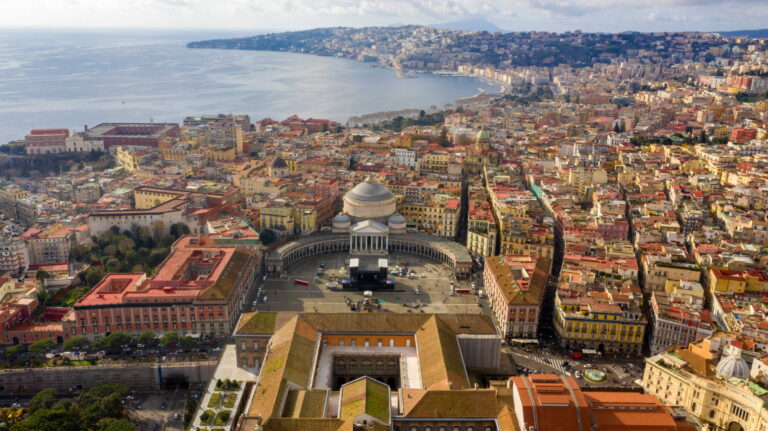
In Naples, every alley has a name, and almost every name has a story to tell. Some walk through the historic centre absently reading the plaques on street corners; others stop, grow curious, and wonder why that particular side street is called just so. Neapolitan odonymy — the study of street names — is a discipline that weaves together history, legend, dialect, and popular memory. Discovering it means learning to read the city in a completely new way, one alley at a time.
The king who gave the streets their names
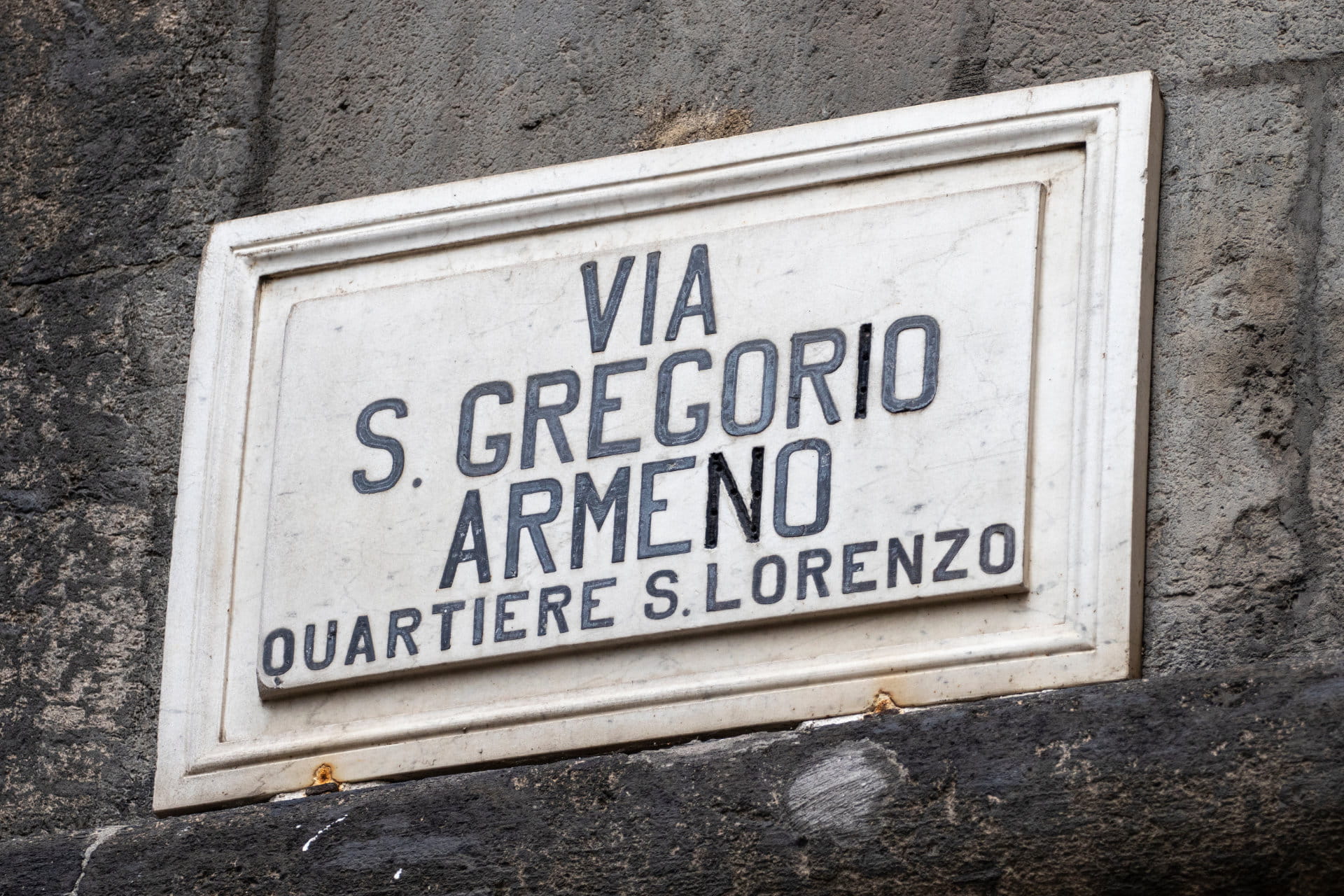
Before 1792, Naples had no official system of street names or house numbering: streets were known by the names and nicknames the people themselves had coined over time, often tied to a tree, a church, or some particular object that characterised that spot. It was Ferdinand IV of Bourbon, prompted by the regent of the Vicaria, Luigi Medici di Ottajano, who introduced the city’s first street signage, designed to make it easier to find people. A detail that surprises many visitors: Naples was thus one of the first Italian cities to adopt a measure of this kind, second only to London and Paris.
Popular names, awkward names
Ferdinand IV’s decree was anything but refined in its execution: the order was simply to transcribe onto plaques the names already used by ordinary people for each street, with very little filtering. This officially sanctioned some colourful, and at times explicit, place names, which remained in use until Italian Unification in 1861. Some of these names were tied to episodes long since forgotten; others were distorted over time through habit or wordplay; others still had origins so deeply rooted in popular slang that not even Neapolitans of the time could say for certain what they originally referred to. It’s an aspect of the city’s history that rarely appears in traditional guidebooks, yet it offers a vivid picture of how Neapolitans lived in, and told the story of, their city before it became “official”.
Vanished trades, streets that remember
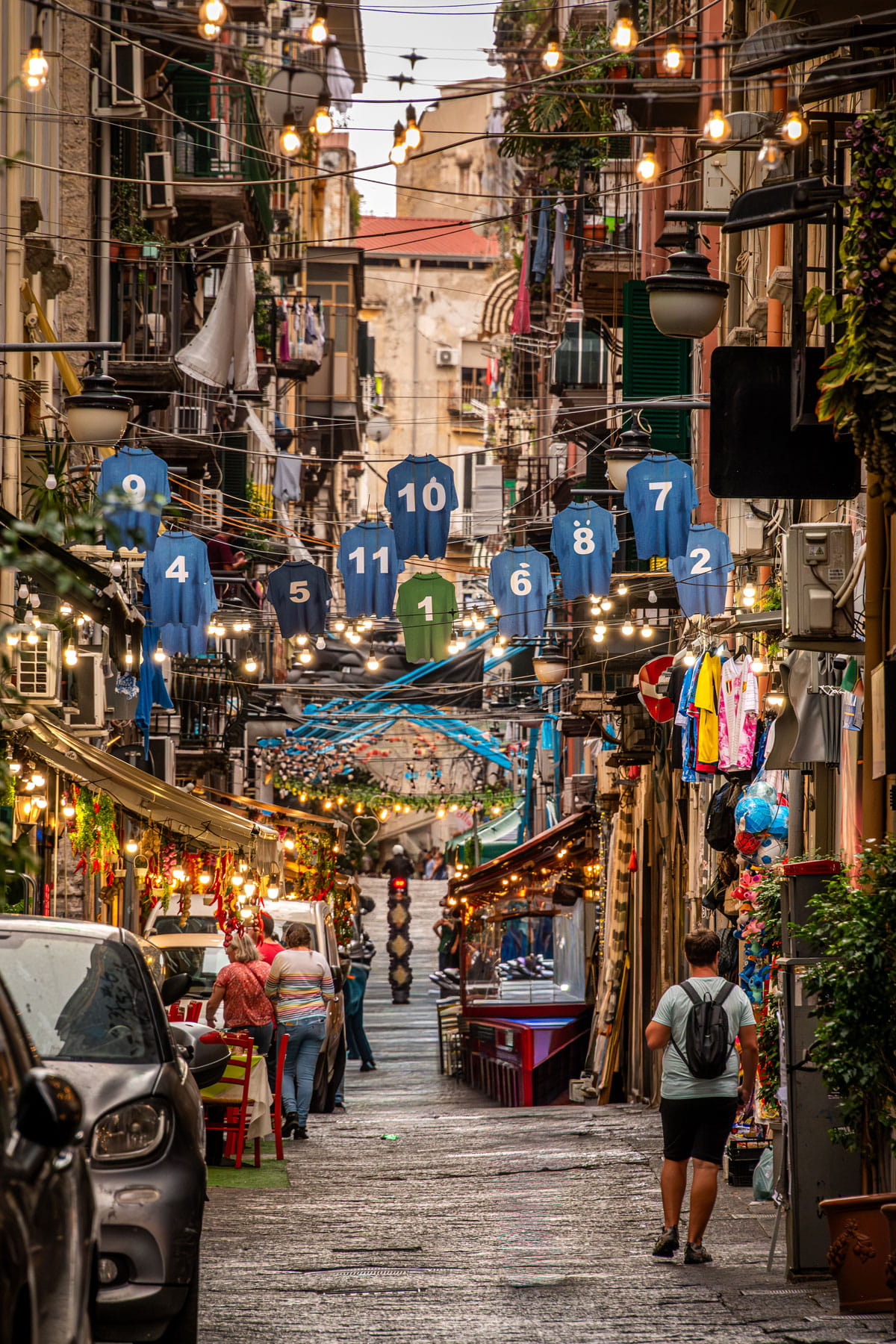
Many alleys in the historic centre still bear the names of trades that no longer exist. At a time when the city’s economy revolved around workshop craftsmen, each alley tended to specialise in a particular trade or type of goods, and the street’s name ended up permanently identifying that activity. Even though the vendors and craftsmen who once filled those alleys disappeared long ago, replaced by different businesses and more modern retail patterns, their names remain carved into the city’s street names as indelible traces of a neighbourhood economy built on personal relationships, not just commercial exchange.
Spaccanapoli, the street that doesn’t exist
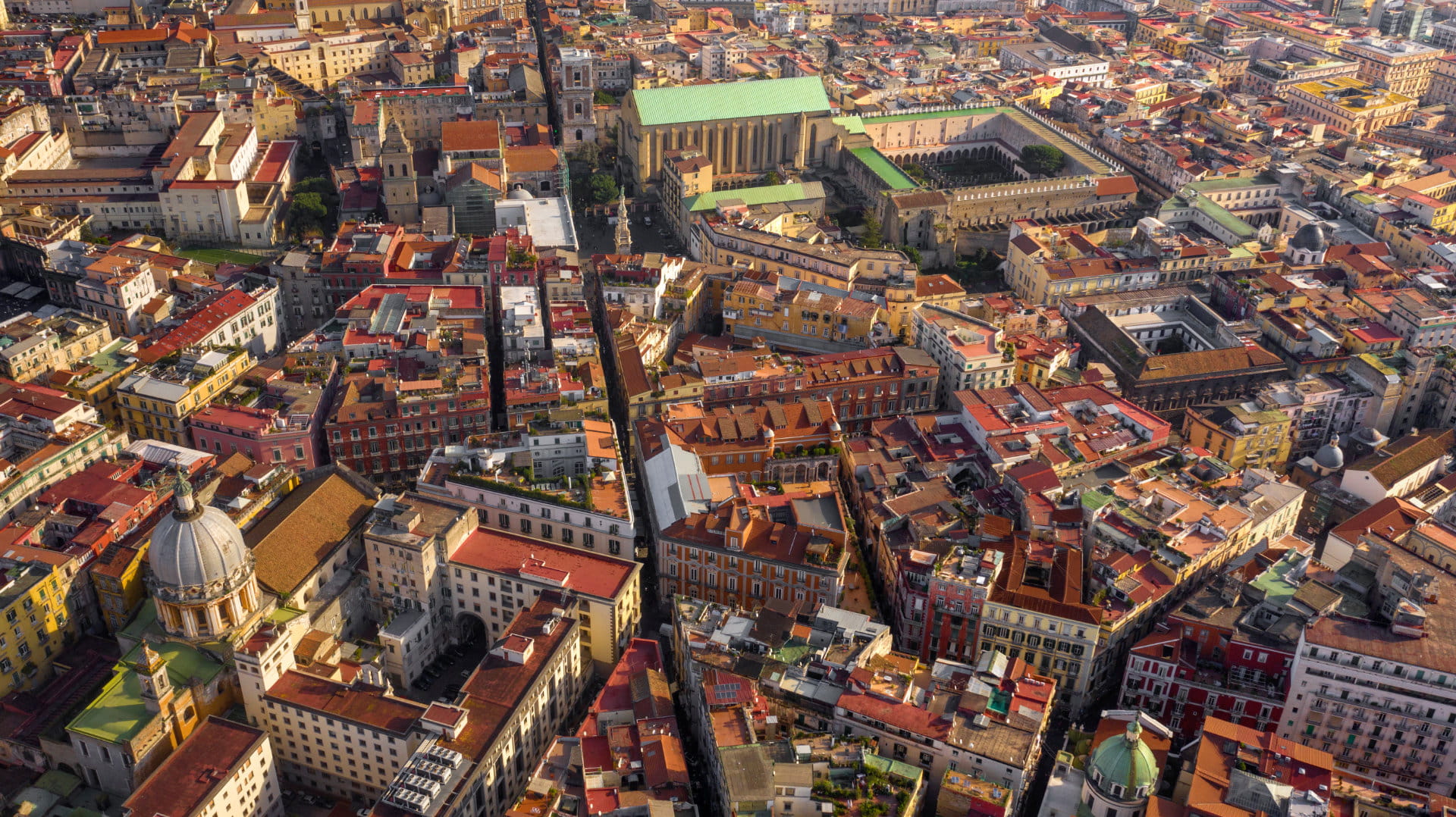
Anyone who has looked at a map of the historic centre knows the name Spaccanapoli, the straight thoroughfare that symbolically splits the old city in two. And yet, anyone looking for a street sign reading “Via Spaccanapoli” will never find one: it is a popular nickname Neapolitans gave to a route made up of no fewer than seven different streets running one after another in a straight line, each with its own official name. It is one of the most fascinating examples of how “lived” toponymy — the one experienced and told by residents — can carry more weight and fame than the official version printed on the plaques.
From the 1890 commission to today
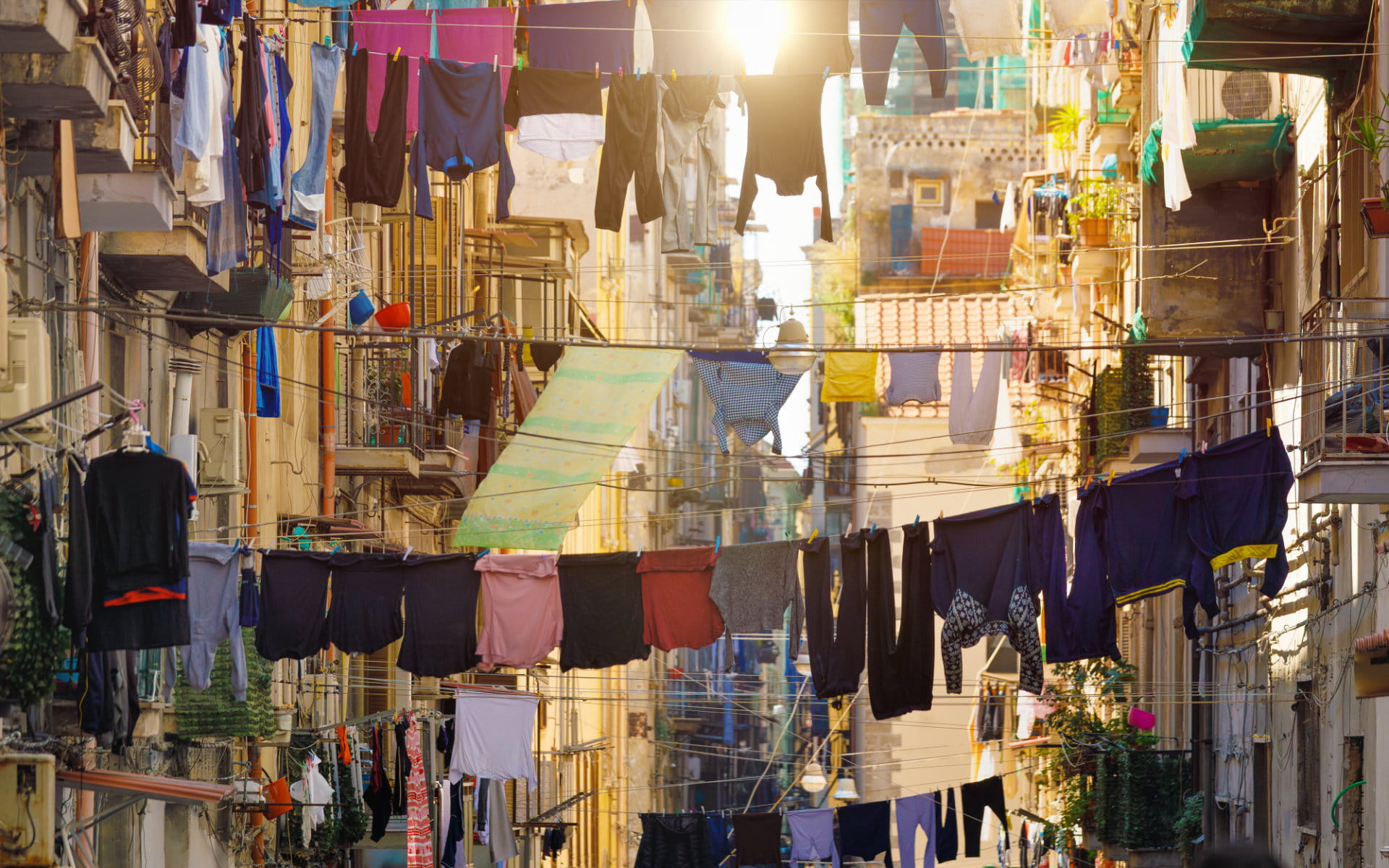
After Italian Unification, Naples’ street-naming underwent a period of profound change. In 1890, as part of the city’s major urban renewal project, a dedicated commission was established, chaired by historian Bartolomeo Capasso, tasked with naming the new streets created by urban development and removing some of the names deemed undignified, inherited from the Bourbon era. Despite this effort, many traditional names have survived and remain in everyday use among Neapolitans today, often more familiar than the official name itself. Even in recent times, the city’s street-naming has continued to be revised — for example, with the removal of certain names linked to the Fascist period. Studying the streets of Naples means, in a sense, studying the city’s own political and social history, written quite literally on its walls.
Streets with two names: the puzzle of duplicate names
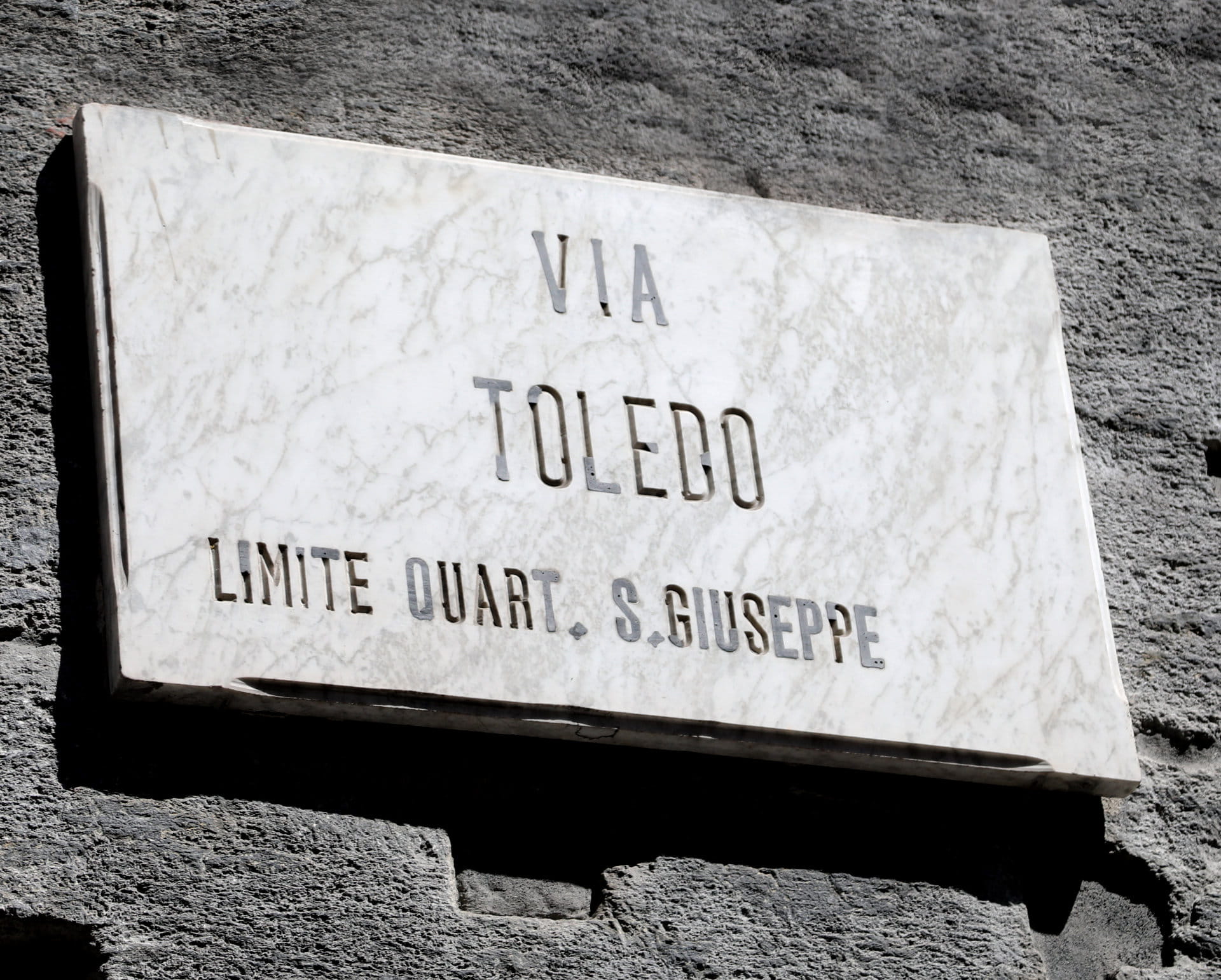
Naples is a vast city, and this has, over time, produced numerous duplicate street names, often resolved in curious ways. There is, for instance, both a Via Carlo de Cesare, a side street off Via Toledo, and a Via Raffaele de Cesare in Santa Lucia: to tell them apart, Neapolitans have learned to always specify the full first and last name. The same applies to Via Alessandro Poerio, near Porta Capuana, not to be confused with Via Carlo Poerio in the Chiaia district, the latter known to Neapolitans by its popular nickname, vico freddo (“cold alley”). Even Via Toledo, perhaps the city’s most famous street, has seen its official name changed repeatedly over the centuries, yet has remained simply “Toledo” in the everyday language of generations of Neapolitans — another sign of just how much stronger lived toponymy can be than the version written on the signs.
Discover Naples with us
Every alley in Naples hides a small mystery waiting to be uncovered: a name distorted over centuries, a forgotten trade, a legend passed down from generation to generation. It is precisely these details, often invisible to those visiting the city in a hurry, that turn a walk through the historic centre into an unforgettable experience. With OtherWise Travel's walking tours, you can discover the hidden meaning behind the names of the streets you're walking through, guided by someone who truly knows the city. Discover Naples with us.